SEO content: how to write texts for search — step-by-step guide

TL;DR
SEO content are texts created for real search demand and user intent to attract organic traffic. This article gives a step-by-step process: collect a semantic core, cluster queries, design structure and metadata, use Search Console to update content and improve CTR. Includes briefs, tables, checklists and before/after cases.
SEO content are texts and pages created for real search demand and intent to attract organic traffic and leads. The key difference from “just articles” is systematization: a semantic core, query clustering, intent-driven structure, correct Title and Description, internal linking and regular content updates using Search Console data. All of this works together and relies on E-E-A-T: real author experience, expertise, authority and trust.
Что такое SEO-контент и зачем он нужен
Short: SEO content is content for SEO that answers a user’s query better than competitors and is clear to algorithms. It:
- covers search intent (informational / commercial / transactional);
- fully explores the topic using LSI words and related vocabulary;
- provides a usable structure (H1 → H2 → H3), tables, diagrams, examples;
- earns clicks with strong Titles and Descriptions and a clear snippet;
- is integrated into the site’s cluster via internal linking and avoids cannibalization;
- is regularly improved by updating content based on Search Console.
Business outcome: increased organic traffic, lower lead costs and a predictable flow of inquiries. In B2B and IT this complements content marketing by covering early and mid funnel stages.
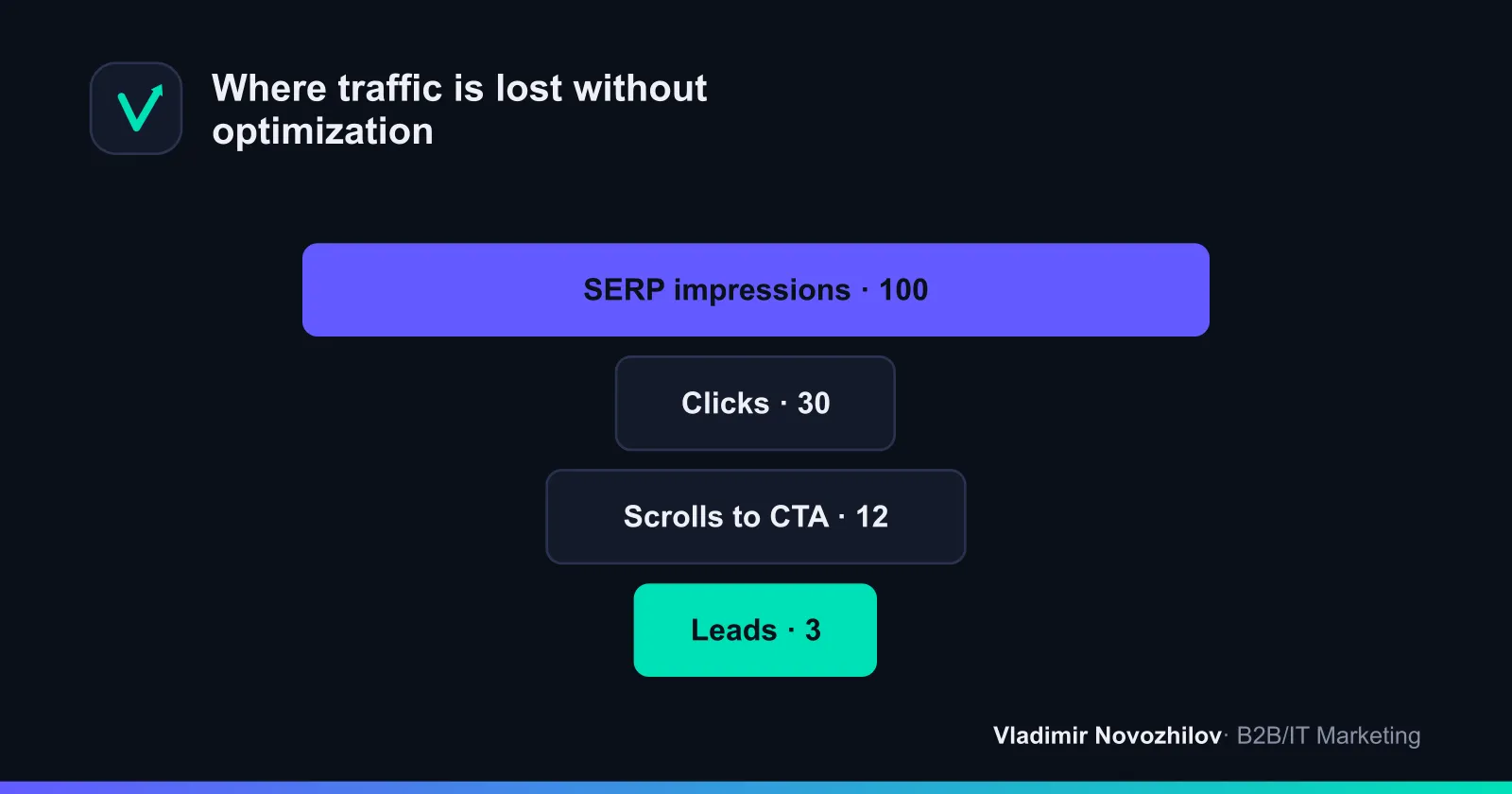
Как определить поисковый интент (инструменты и признаки)
Search intent is the user’s real task behind a query. Determining intent starts with reading the SERP in the target region and search engine (Google/Yandex):
- Informational: TOP contains guides, checklists, FAQs, reviews.
- Commercial: category pages, comparisons, “prices”, “tariffs”, case studies.
- Transactional: product/service cards, “buy”, “order”, “book”.
Signs in snippets:
- Presence of price, ratings, FAQ markup, sitelinks, map (for local services).
- Wording of Titles (“how”, “what is”, “prices”, “buy”) and H1 types among leaders.
- Content format in TOP: articles, listings, calculators, landing pages.
Where to look: the SERP for the target region (e.g., Moscow/Russia for Yandex, chosen country/language for Google). For local queries in Yandex check results with the correct geo; for Google use the domain and language of the region. Note which formats rank and which blocks are required (FAQ, tables, “Pros/Cons”, price examples).
Сбор семантики: источники и формирование семантического ядра
The semantic core is the list of queries and intents you intend to cover. Main steps:
- Base topics: list key services/products/customer problems.
- Expansion: use autocomplete and “Related searches” in the SERP.
- Check frequency and regionality.
- Clarify intent and group queries by target pages.
Инструменты (Яндекс.Вордстат, Ahrefs, Google KPI, подсказки)
- Yandex.Wordstat — for RU and CIS: check frequencies by region, seasonality, related tails. Pull data for the target GEO.
- Google Keyword Planner / Ahrefs Keywords Explorer — for Google: volume estimates, difficulty, query variations; check language and location.
- Autocomplete and “People also ask/Related questions” — record phrasings and LSI words to include in the text.
- Site analytics — internal search queries, top pages, cannibalization (multiple pages competing for the same query).
Practice: collect queries in a spreadsheet with columns “Query”, “Intent”, “Volume (region)”, “URL-cluster”, “Priority”.
Кластеризация запросов — методика и примеры
Query clustering groups keys that should point to the same page. Simple method:
- By meaning: same user task → one cluster.
- By SERP overlap: if the TOP-10 for two queries shows the same pages — cluster them.
- By intent: do not mix informational and transactional keys on the same page.
Mini manual clustering algorithm:
- Sort queries by intent.
- For each potential cluster open the TOP-10 and assess page overlap.
- Determine the cluster’s “anchor” query — it sets the H1 and Title.
- Tails/LSI words go into subheadings and text.
Example clusters for B2B services:
- “аудит сайта” (commercial) → service landing + cases + prices + FAQ.
- “как сделать аудит сайта” (informational) → detailed guide + checklist.
- “аудит seo сайта цена” (commercial) → separate “prices” page or a price block.
Как составить структуру статьи: H1 → H2 → H3 (шаблоны и примеры)
Structure is the reading script for intent and snippets.
- H1: states the topic and the promised benefit.
- H2: logical blocks for user questions.
- H3: details, examples, checklists, tables.
Примеры H1/H2 для информационного, коммерческого и транзакционного интента
- Informational (SEO article, blog):
- H1: “SEO-контент: как писать тексты под поиск — пошаговый гид”
- H2: “How to determine search intent”, “Gathering semantics”, “Query clustering”, “Examples of Title and Description”, “Common mistakes”
- Commercial (service):
- H1: “Content and SEO audit: timelines, prices, sample reports”
- H2: “What’s included”, “How we work”, “Timelines/Cost”, “Case studies”, “FAQ”
- Transactional (lead-gen landing):
- H1: “Content optimization in 14 days — from brief to release”
- H2: “Results”, “Stages”, “Guarantees”, “Q&A”, “Request a quote”
Add tables, checklists and mini-FAQ directly in the body — this improves relevance and engagement.
Оптимизация на странице: Title, Description, URL, метки и schema.org
Key principles:
- Title and Description reflect intent and value. Put the key closer to the start of the Title; in the Description emphasize benefit and specifics; avoid keyword stuffing.
- URL — short, readable, Latin characters, words separated by hyphens.
- H1 — one per page; it does not have to repeat the Title verbatim.
- Internal linking — connect clustered pages with semantically relevant anchors, add breadcrumbs.
- Microdata: FAQ, BreadcrumbList, Article (author, date, organization) — helps CTR and E-E-A-T.
- Media: alt texts should be descriptive, not keyword-stuffed “keyword strings”.
Examples of Title and Description (5 variants for informational intent):
| Title | Description |
|---|---|
| SEO-контент: пошаговый план от семантики до метаданных | Как определить интент, собрать семантику, выстроить структуру и мета. Чек-листы, шаблоны и примеры для роста CTR и трафика. |
| SEO-контент — как писать тексты под поиск: гайд | Пошагово: семантическое ядро, кластеризация запросов, LSI-слова, Title и Description, перелинковка. Обновление по Search Console. |
| SEO-контент: шаблоны структуры и метаданных | Готовые H1–H3, примеры Title/Description, таблицы для интентов. Инструкции по GEO и контроль качества контента. |
| Как создать SEO-контент, который ранжируется | Разбор интента, сбор семантики, оптимизация контента и мета. Кейсы до/после: рост позиций, CTR и лидов. |
| SEO-контент для B2B и IT: практический гид | Семантика, структура, LSI-слова, микроразметка. Обновление контента и перелинковка для стабильного трафика. |
Мультимедийные элементы: таблицы, сравнения, чек-листы, примеры кода/скриншоты
For informational queries, media mix is part of relevance. Add:
- comparative tables (intents, formats, metrics);
- checklists and templates (acceptance, brief, publishing);
- headline figures, diagrams, mini process maps;
- snippet examples (as text), fragments of markup code (without links).
Практические шаблоны: ТЗ для копирайтера, шаблон статьи, чек-лист приёмки
Working brief for SEO copy:
- Goal and intent: informational/commercial/transactional.
- Target audience and region (Google/Yandex, language, city/country).
- Anchor key (cluster query) and list of supporting queries.
- Required sections H1 → H2 → H3.
- LSI words/related vocabulary and questions from “Related questions”.
- Example Title and Description (2–3 variants).
- Media requirements (tables, diagrams, examples, alt texts).
- E-E-A-T: author, experience, update date, cases/data.
- Internal linking: from which pages and to which pages, anchors.
- KPI: target CTR, behavioral metrics (time, depth), leads.
Article template (skeleton):
- Introduction of 2–3 paragraphs: definition, who the material is for, what it provides.
- H2: Definition and value (short answer, table/diagram).
- H2: Intent and SERP (signs, regional nuances).
- H2: Semantics and clustering (table/steps).
- H2: Structure and meta (examples of Title and Description).
- H2: Cases/mistakes/FAQ.
- Conclusion and CTA by context (for an info article — “read next” or “use the checklist”).
Content acceptance checklist:
- Intent matches the TOP in the target region.
- Semantic core collected and clustering completed.
- H1–H3 cover “Related questions”, LSI words included.
- Title and Description are correct, not stuffed, and tested.
- Internal linking set up, cannibalization excluded.
- Microdata and alt texts in place, date and author specified (E-E-A-T).
- Text is scannable: lists, tables, illustrations, examples.
- Publication checked technically; a template is saved for updates.
Таблица: форматы контента по интенту (информационный/коммерческий/транзакционный)
| Интент | Основной формат | Обязательные элементы | Метрики успеха |
|---|---|---|---|
| Информационный | Гайды, чек-листы, обзоры | H2–H3 по «Похожим вопросам», таблицы, LSI-слова, FAQ | Позиции, CTR, время на странице, сохранения в закладки |
| Коммерческий | Категории/услуги, сравнения, цены | Кейсы, выгоды, цены/тарифы, блок доверия, перелинковка на «как выбрать» | Конверсии, лиды, клики по CTA, глубина переходов |
| Транзакционный | Карточки услуг/товаров, лендинги | Призыв к действию, контакт/форма, гарантия, микроразметка | Отправки форм, звонки, микроконверсии |
Как обновлять старые тексты с помощью Search Console (шаги + фильтры)
Your growth base is pages with impressions but low CTR or missing sections. Sequence:
- Performance report → Pages → select the URL.
- Switch to “Queries”: sort by impressions.
- Find:
- queries ranked 3–15 with CTR below benchmark (e.g., 1–3% vs average 4–7%);
- queries with high impressions and zero clicks — a sign of unmet intent.
- Map query phrasing to section headlines: what’s missing? Add:
- missing H2/H3, checklists, tables with choice options;
- exact query phrasings in subheadings (without keyword stuffing in text);
- refined Title and Description for the most frequent phrasings.
- Check internal linking: add links from relevant articles, remove cannibalization.
- Update the date and note changes. Compare CTR/positions/clicks after 14–28 days.
Practical trick: create a table “Query → Position → CTR → Impressions → Action (new H2/meta/paragraph/table)”. This is the base for A/B iterations.
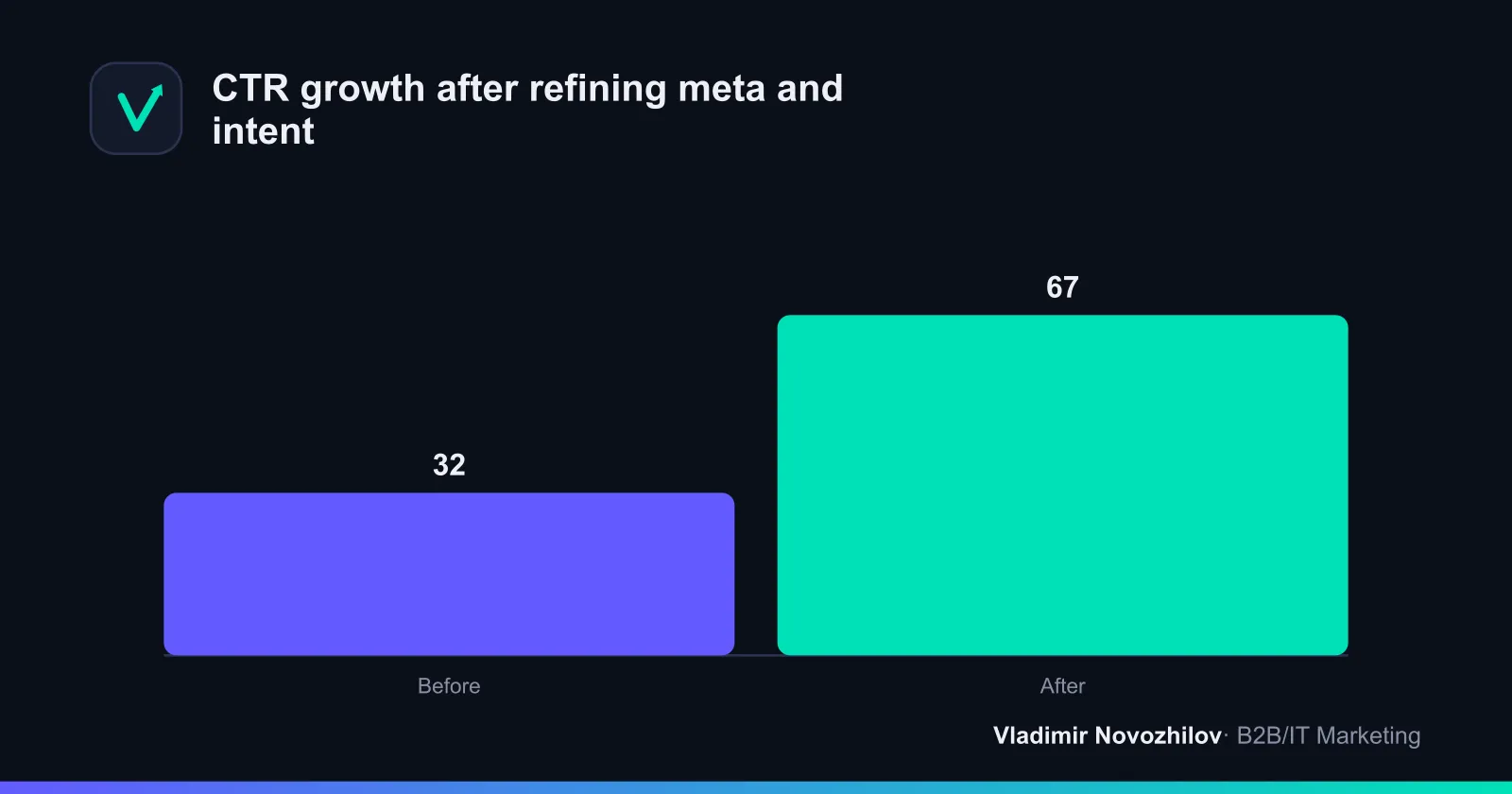
Кейсы «до/после» с метриками (позиции, CTR, трафик)
Case 1. Informational guide (RU, Google/Yandex)
- Before: average position 11.8; CTR 1.9%; 380 clicks/28 days.
- Changes: rewrote Title and Description for clear informational intent, added two H2s with LSI words and a comparison table; strengthened internal linking from three thematic articles.
- After (35 days): position 6.2; CTR 4.1%; 910 clicks/28 days; time on page +28%.
Case 2. Service page (B2B, transactional intent)
- Before: position 14.5; CTR 0.8%; 14 leads/quarter.
- Changes: reworked structure (cases and pricing moved to H2), refined internal link anchors, added FAQ and microdata. Removed a duplicate page, eliminating cannibalization.
- After: position 7.1; CTR 2.3%; 33 leads/quarter; cost per lead down 38%.
Conclusion: improving meta and structure for the correct search intent plus internal linking consistently raises CTR and positions, especially around the 5–15 position range.
Частые ошибки и как их избежать
- Writing “for everyone”: mixing different intents on one page. Fix: one page — one intent.
- Ignoring LSI words and “Related questions”: an incomplete page. Fix: add sections with clear answers.
- Headline and text keyword stuffing: drops CTR and trust. Fix: natural language, keys in headings and meta.
- No internal linking: cluster is “broken”. Fix: add semantically relevant links, breadcrumbs, “Read more”.
- Cannibalization: multiple pages target the same query. Fix: merge content, set canonicals, redirect.
- No content updates: positions fall. Fix: quarterly audit via Search Console.
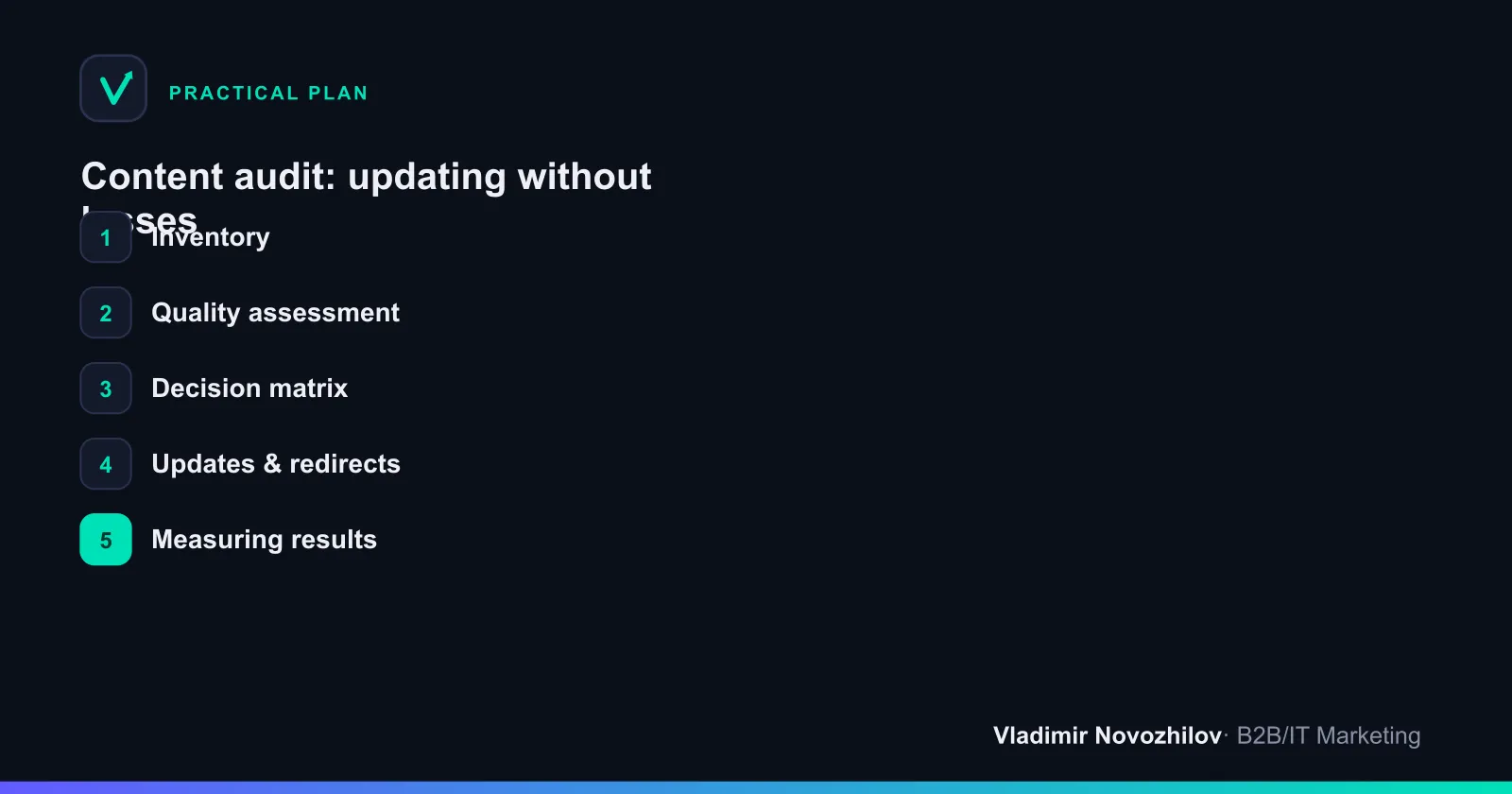
Чек-лист/пошаговый план для создания SEO-статьи
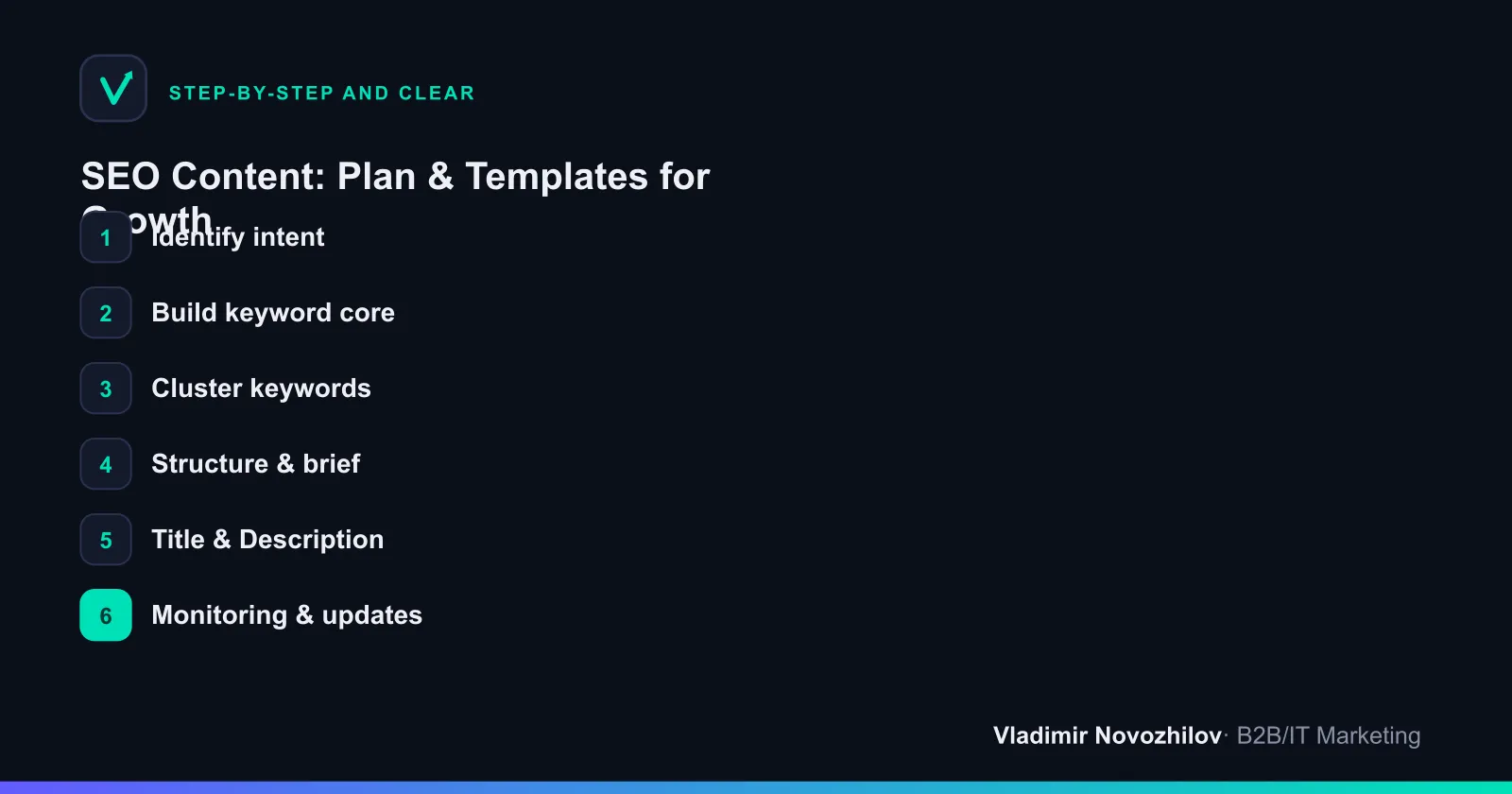
- Determine intent (read the TOP in region and search engine).
- Collect semantic core: base keys, tails, LSI words.
- Cluster queries: one cluster — one page.
- Create structure: H1 → H2 → H3; add tables and checklists.
- Write text with E-E-A-T in mind: author experience, data, cases.
- Craft Title and Description: value + demand phrasing.
- Set internal linking: from/to cluster pages.
- Publish and check microdata, alt texts, performance.
- Monitor Search Console: positions, CTR, impressions.
- Plan content updates every 1–3 months.
«SEO копирайтинг» и полнота раскрытия темы
SEO copywriting is not about “keyword density” but readability and completeness of the answer. Practice:
- First screen: clear value promise — who and what will get.
- The “inverted pyramid” principle: conclusions first, details below.
- Add examples, cases, figures; lists and tables save readers’ time.
LSI-слова и смежная лексика: как использовать правильно
- Identify 10–20 key LSI terms from autocomplete and TOP results.
- Place them in H2–H3 and naturally in text.
- Don’t chase “density”; the goal is completeness, not repetition.
Перелинковка: как передать вес целевым страницам
- Inside the cluster: thematic articles → main cluster page; anchors should be semantic and varied.
- Between clusters: link to the next funnel stage (e.g., from informational article → service page).
- Check for broken links when updating and eliminate cannibalization.
Обновление контента: контроль и A/B-подход
- Plan: monthly — quick meta and FAQ edits; quarterly — refactor structure and examples.
- A/B over time: change one major factor per iteration (Title/Description, H2 blocks, tables). Watch CTR and positions by keys.
- Keep the variant with the best CTR while preserving positions.
Примеры ТЗ для копирайтера (фрагмент, можно копировать)
- Topic/H1: “[Topic] — step-by-step guide”
- Intent: informational
- GEO and SE: Russia, Yandex and Google
- Cluster: [anchor query], tails: [list]
- LSI words: [10–20 terms]
- Required H2: [list]
- Example Title/Description: [2–3 variants]
- Internal linking: from [URL1, URL2] to [URL3]
- E-E-A-T: author with [N] years experience, update date, case with numbers
- KPI: median TOP-10 position in region, CTR ≥ [X]%
Пример работы с Search Console: фильтрация запросов, выбор для обновления
- Filter “Compare periods”: last 28 days vs previous 28 — look for CTR or position drops.
- Segment “Queries”: position 4–20, impressions > 500, CTR < 2.5%. This is “gold” for rewriting meta.
- Segment “Queries with no clicks”: impressions > 200, clicks 0 — add an H2 with exact phrasing and a mini-FAQ.
- For a page with a drop: check if cannibalization appeared (another page rising for the same keys). Merge/redirect if needed.
Контент под SEO vs контент-маркетинг: как совместить
- SEO content provides reach and a steady traffic stream.
- Content marketing builds brand, trust and conversions at later stages. Combine them: informational articles → cases/services/demo via thoughtful internal linking.
Мини-методика оценки результата
- Before publishing: save the base plan for meta, H2-H3, list of queries.
- After 28–35 days: record positions, CTR, clicks. Compare to the plan.
- If CTR < benchmark for the position — rework Title and Description, add “Pros/Cons” blocks, tables and specifics.
Часто задаваемые вопросы про seo-контент
Short standalone answers (suitable for FAQ markup):
- What is SEO content? Content designed for search demand and intent, with optimized structure, metadata and internal linking, updated based on Search Console.
- How to determine search intent? Analyze the TOP by region and SE: page formats and snippets indicate informational/commercial/transactional.
- How many words are needed for an SEO article? Use the median length in TOP-10 for your GEO and language, but prioritize completeness.
- How to update old texts? Use Search Console filters: low CTR at good positions, impressions without clicks, add missing H2/FAQ.
- Which Titles and Descriptions perform best? Those that reflect intent and value: key near the start, concrete benefit, no stuffing.
GEOS and trust (E-E-A-T):
- Publication region: specify for which search engines and countries/cities the material is optimized (e.g., Russia — Yandex and Google). Use local phrasing, price examples and units.
- Author and date: indicate experience, role and update date — this increases trust and perceived quality.
Conclusion: a systematic process — from semantics and clustering to metadata, internal linking and content updates — yields predictable growth. Take steps sequentially, record metrics and iteratively improve materials — that’s how you win in competitive SERP.
FAQ
- Что такое seo-контент и чем он отличается от обычного контента?
- SEO content is material designed around real search demand and intent, with correct metadata, structure and internal linking. It differs from regular content by collecting queries into a semantic core, considering search snippets, LSI words, region, and being validated with Search Console data (positions, CTR, impressions). The goal is stable organic traffic and conversions.
- Как определить поисковый интент для ключевого запроса?
- Check the SERP in the target region and search engine (Google/Yandex): the types of pages in the TOP and snippets indicate intent (informational, commercial, transactional). Evaluate headline wording, presence of prices, filters, checklists or product cards. Match this to your objective and design the page for that intent. For GEO-dependent topics use regional SERP and local phrasing.
- Сколько слов нужно для seo-статьи и как выбирать объём?
- Use the median length from the TOP-10 results for the target region and language. Informational articles typically run 1500–3000 words, but completeness of the answer and a usable structure (H2–H3, tables, lists) matter more. Don’t inflate length artificially — add sections that genuinely answer user questions.
- Как обновлять старые статьи с помощью данных Search Console?
- Open the Pages report in Search Console, filter the target URL, then view the 'Queries' tab: find queries with high positions but low CTR, and impressions without clicks. Rewrite Title and Description using those phrasings, add missing sections and LSI words, and improve internal linking. Check CTR, positions and clicks after 2–4 weeks.
- Какие метаданные (Title/Description) работают лучше и как их писать?
- Best metadata reflects intent and value: Title with the key closer to the start, specifics (numbers, benefit), clear format (guide, checklist, prices). Description should be a single sentence of benefit + concrete points, without excessive repetition. Write for the actual snippet in the target region, test variants through updates and compare CTR in Search Console.