Video Marketing for Business: Formats, Strategy and Metrics 2026

TL;DR
In short: video marketing is the systematic use of video content to grow reach, leads and sales. This guide covers formats (short and vertical videos, webinars, shoppable video), platforms, video analytics and ROI. It includes briefs, scripts and checklists to launch video in marketing within 30–180 days.
Video marketing for business — what it is and why it works
Video marketing is the systematic use of video content to solve business goals: from awareness to leads and sales. Unlike a “one‑off clip,” video in marketing is built on hypotheses, metrics (VTR, CTR, watch time, CPA/CAC) and continuous optimization. In 2026, video for business is the most universal format for explaining complex products (B2B and IT), building trust through case studies and accelerating deals.
Why it works:
- Video conveys value faster (visualization, demonstrating a case in 30–60 seconds).
- Platform algorithms for video (YouTube, TikTok, Instagram Reels, VK, Odnoklassniki) prioritize engaged viewing.
- A funnel from short vertical teasers to a webinar with Q&A creates gentle warming and conversion without aggressive selling.
When you need video marketing: goals and KPIs (reach, engagement, leads, sales)
In short: the goal defines the format and metrics. Without KPIs, “video marketing” becomes an expense.
- Awareness/reach: CPM, VTR, share of completions 25/50/75%, frequency.
- Engagement: watch time/average view duration, ER, clicks on CTA (CTR).
- Leads/sales: CPC/CPA, CAC, landing conversion, revenue/ROMI, LTV.
- Lead quality: qualification (MQL/SQL), sales cycle speed, win rate.
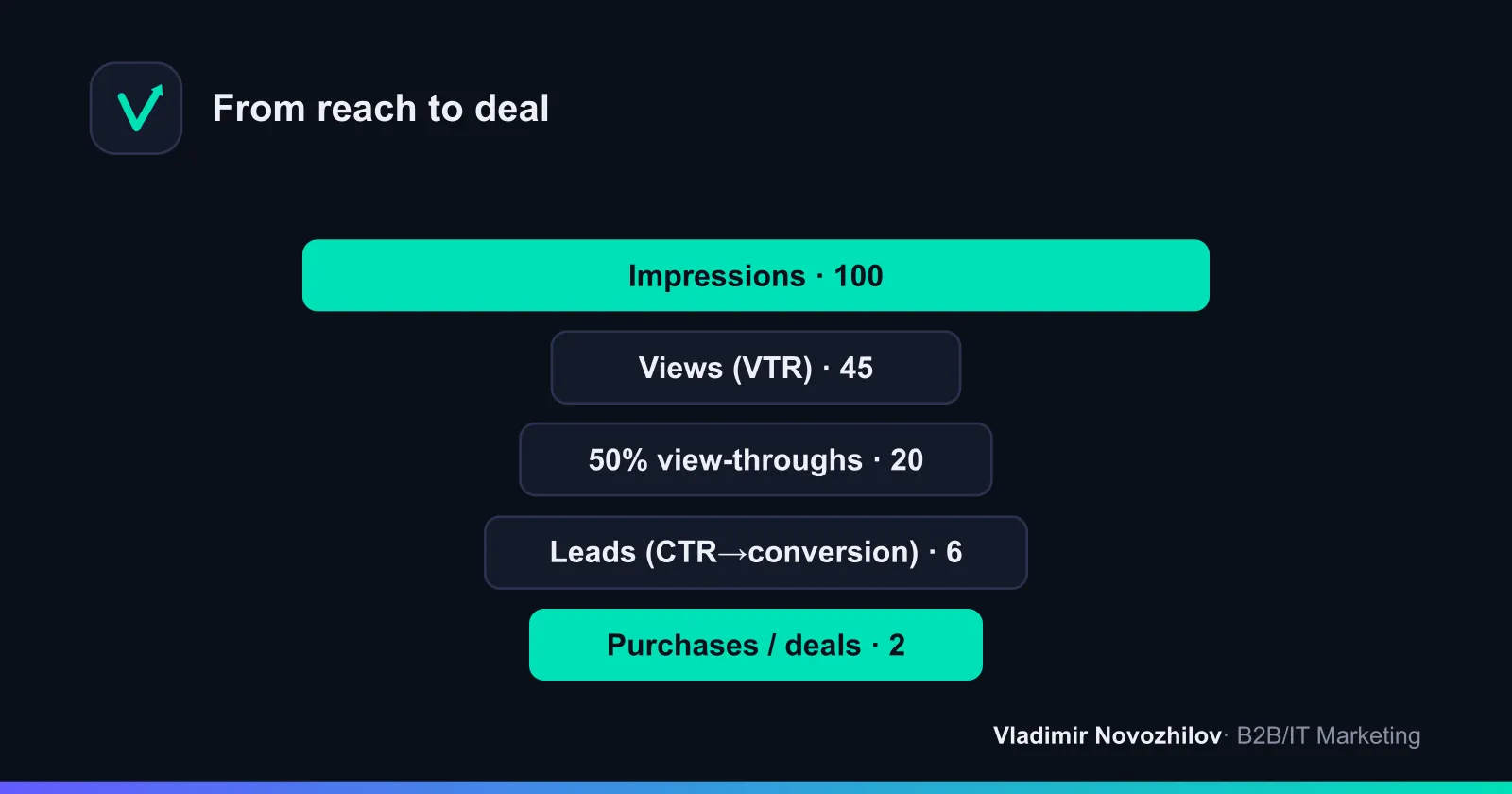
Practical funnel benchmarks for video (cold audience):
- VTR 30–45% (views per impressions), CTR 0.5–1.5% for native content and 0.8–2.5% for performance ads.
- Watch time: 6–12 seconds for short videos, 30–90 seconds for overview videos, 12–30 minutes for a webinar (average per user).
- Conversion from clicks to lead: 5–12% for warm, 2–6% for cold. Then — CAC and ROMI by the attribution model.
Video content formats and where to use them (short, long, live, shoppable)
In short: combine short and vertical videos for reach with long content (explainer, webinar, testimonial) for conversion.
- Short videos (15–30s): teasers, value offers, UGC compilations, webinar clips. Channels: TikTok, Reels, VK Clips, Shorts.
- Vertical videos (9:16): must‑have for mobile reach and quick creative testing.
- Long explainers (60–120s) and demos (up to 3 min): show product/case, handle objections.
- Webinars (30–90 min): deep expertise, Q&A, lead magnet for B2B. Afterwards — clip the webinar into 10–20 shorts.
- Live streams/AMA: real‑time communication, demonstrations, answering questions.
- Testimonial/case: 60–180s, “before/after”, client results.
- Shoppable video: player with product cards and CTA on the site/landing or within platform ecosystems.
Table: what and where to use
| Format | Funnel stage | Length | Video platforms | Key metrics |
|---|---|---|---|---|
| Short videos | Reach/engagement | 15–30s | TikTok, Reels, VK Clips, Shorts | VTR, CTR, CPM |
| Vertical videos | Reach | 6–20s | TikTok, Reels, VK Clips, Shorts | VTR, watch time |
| Explainer/Demo | Consideration | 60–180s | YouTube, website, VK, email | Watch time, CTR, conversion |
| Testimonial/Case | Consideration/conversion | 60–180s | YouTube, website, VK, LinkedIn | CTR, inquiries, CPA |
| Webinars | Leads/conversion | 30–90 min | YouTube, VK, website | Registration, attendance, leads |
| Live streams | Engagement | 20–60 min | TikTok, VK, YouTube | Peak viewers, comments |
| Shoppable video | Conversion | 20–90s | Website, product page | CTR to product, conversion, AOV |
Video marketing in B2B: differences from B2C and effective examples
In short: longer sales cycles, more decision‑makers, trust is more important. Webinars, explainers, demos and testimonials perform better.
Effective tactics:
- A Q&A series with an expert: 10–15 short vertical clips for reach, then an explainer.
- Demo focused on before/after: specific metrics (reduced TTV, increased conversion by X%).
- Webinar with case breakdown + Q&A; then clip the webinar into shorts and run an email follow‑up to registrants.
- Client testimonial: numbers, process, ROI. Great for mitigating risk in late stages of the deal.
Platforms and distribution channels: YouTube, TikTok, Instagram, VK, website, email
In short: choose channels by goal and budget. In Russia/CIS consider restrictions on Meta platforms for paid promotion.
- YouTube: long videos, search SEO, webinars, Shorts for teasers. Strong search discovery and long tail.
- TikTok: quick hypothesis tests, short/vertical videos, viral reach. Good for top‑of‑funnel.
- Instagram (Reels): visual contact and warming, good for branding; account for regional ad restrictions.
- VK: multi‑format — feed, clips, streams, targeted ads by interests/signals. Easy integration with communities and site.
- Odnoklassniki: mass reach 35+, promo activities, thematic groups.
- Website and email: host webinars, shoppable video on product pages, nurture sequences. This is the core for attribution and conversions.
Distribution tip: plan versions for platforms in advance (aspect ratio, length, subtitles, CTA).
How to create a video: from brief to release (brief template, script, shot list)
In short: a strong brief saves 30–50% of production budget and speeds up shooting.
Brief template (abridged):
- Goal and KPI: reach, leads, sales (numbers). ROMI triggers and deadlines.
- Audience: segments, pains, barriers, insights.
- Message: 1 main thesis + 2–3 proofs.
- Call‑to‑Action: destination (form, chat, call), legal requirements.
- Video content formats: short/vertical, explainer/demo, webinars, testimonial.
- Platforms: YouTube, TikTok, VK, Instagram Reels, Odnoklassniki, website/email.
- References and tone of voice: prohibited and mandatory elements.
- Resources: team, budget, timelines; production type (in‑house/external).
Process: idea → video script → storyboard → shot list → shooting → editing → localization → channel versions → release → analytics → iterations.
Example scripts/shot lists for 30s, 60s and a webinar
- 30s (teaser, vertical videos):
- 0–3s: “Pain/offer” (on‑screen text + hook).
- 3–12s: Demonstration of the solution (b‑roll/screencast, 1–2 proofs).
- 12–25s: Mini‑case/social proof (a number, logo).
- 25–30s: CTA (“demo”, “apply”, “subscribe”). Subtitles required.
- Shot list: wide → medium → close‑up on product/action; 6–8 shots.
- 60s (explainer):
- 0–5s: Audience problem.
- 5–20s: How the solution works (3 steps, graphics/screencast).
- 20–40s: Cases/benefits in numbers.
- 40–55s: Objection handling (security, integrations, support).
- 55–60s: CTA.
- Shot list: 10–14 shots, 1–2 locations, 1 screen infographic.
- Webinar (45 min):
- 0–2 min: announce agenda and benefits.
- 2–25 min: content blocks (3–4 sections with demo/case slides).
- 25–40 min: case with numbers and Q&A.
- 40–45 min: offer and CTA. Include chapter markers and timestamps.
Production savings and AI usage: tools and workflows
In short: AI for video reduces «raw footage to publish» time by 30–60%.
Recommended stack:
- Opus Clip, Munch, Vizard — webinar clipping into shorts, auto‑subtitles, auto‑framing for verticals.
- Speech‑to‑text: transcribe interviews → draft script → timestamps.
- AI editor assistant: b‑roll selection, noise reduction, color grading.
- Localization: auto‑translate subtitles, synthetic voice dubbing, maintain terminology.
Workflow “from 1 long to 20 short”:
- Record a webinar/interview 45–60 min.
- Auto‑clip the webinar (10–20 clips of 15–30s) + subtitles.
- Select top 5 by signal metrics (hook rate, retention at 3–5s).
- A/B test creatives on TikTok/VK/Shorts.
- Adapt winners for site/email/landings.
Analytics setup and metrics: which KPIs to count and how to track them
In short: capture UTMs and view events, link to CRM, compare across platforms.
- Events: video_start, video_25, video_50, video_complete, click_to_CTA, form_submit.
- Attribution: UTM for source/medium/campaign/content, post‑click and post‑view. For long cycles use a mixed model (for example, linear + webinar crediting).
- Platform metrics: VTR / View‑through rate, CTR, watch time, CPM/CPC/CPA. Business metrics: CAC, LTV, ROI/ROMI.
- Integration: site analytics + CRM (create lead from video sessions, tag as “video_assisted”).
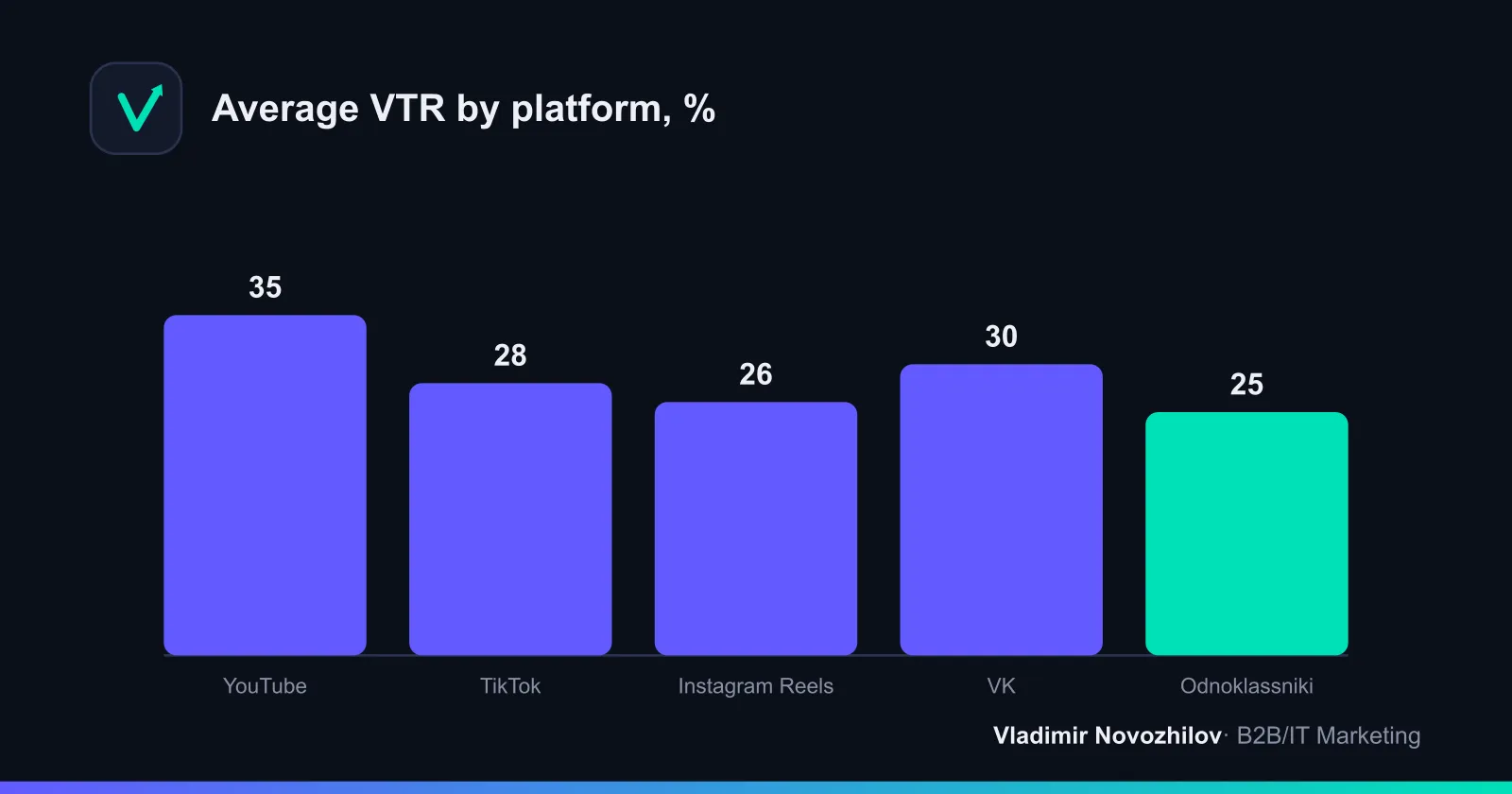
Aggregate benchmarks by platform (RU/CIS, averages):
| Platform | Ideal length | VTR | CTR | CPM (₽) | Average watch time | Notes |
|---|---|---|---|---|---|---|
| YouTube | 60–180s | 30–45% | 0.7–1.5% | 150–400 | 20–60s | SEO, long tail, Shorts for teasers |
| TikTok | 6–20s | 25–35% | 0.8–2.5% | 100–250 | 6–12s | Strong reach, fast tests |
| Instagram Reels | 6–20s | 22–30% | 0.6–1.8% | 150–300 | 6–10s | Consider advertising restrictions |
| VK | 10–30s | 26–35% | 0.7–2.0% | 80–200 | 8–15s | Easy integration with communities |
| Odnoklassniki | 10–30s | 20–28% | 0.5–1.2% | 50–150 | 8–12s | Audience 35+, promo mechanics |
Note: benchmarks are a starting point; decisions require testing and normalization by creative/segment.
Examples and cases with numbers: budget, result, lessons
Case 1. B2B webinar → leads (IT service)
- Format: webinars + clipping webinar into 14 clips.
- Budget: 90k ₽ (preparation, platform, editing). Ads: 180k ₽ (VK + YouTube Discovery).
- Result: 1,240 registrations (CPA 217 ₽), average attendance 31 min, 186 MQL, 54 SQL, 12 deals (CAC 22.5k ₽). ROMI +140% in 90 days (gross revenue minus ad and production costs accounted).
- Lessons: 70% of leads came from remarketing to webinar registration; best performing clips were 20s with a concrete offer.
Case 2. Shoppable video on site (e‑com category 35+)
- Format: 12 short videos 20–45s with product cards.
- Budget: production 160k ₽, media 120k ₽ (Yandex.Direct + VK).
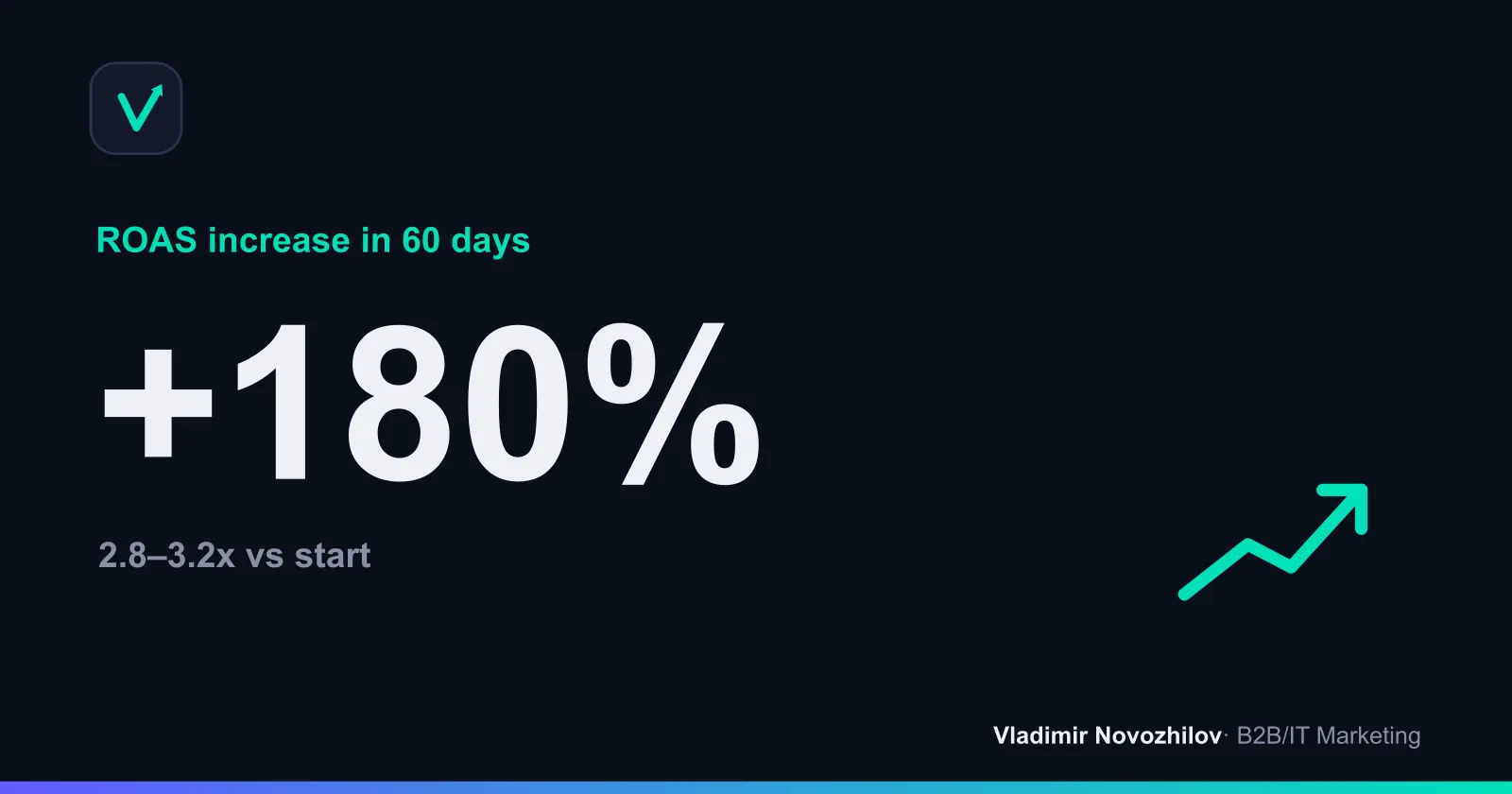
- Result: CTR to product card 2.1%, conversion 3.8%, additional revenue +1.2M ₽, ROMI +180% in 60 days.
- Lessons: subtitles and first 3 seconds with an offer increased VTR by 22%.
Case 3. Explainer + performance (B2B equipment)
- Format: explainer 75s + 8 short vertical teasers.
- Budget: 290k ₽ production, 350k ₽ media (YouTube In‑feed, VK clips).
- Result: VTR 38% (explainer), CTR 1.4%, 320 leads (CPA 2,000 ₽), 7 deals average check 480k ₽, CAC 91k ₽, LTV 2.1M ₽ (upsells). ROMI +260% in 6 months.
- Lessons: best teaser was a before/after cut showing cost savings.
Checklists and templates (brief, shooting plan, budget, A/B tests)
Launch checklist (idea to release):
- Goal, KPI and budget; creative hypotheses.
- Brief approved: audience, messages, offer, legal requirements.
- Video script, storyboard, shot list.
- Platform version plan (9:16, 1:1, 16:9; lengths; subtitles; CTA).
- Prepare channels: profiles, playlists, landings, pixels/UTM.
- Pilot and A/B test 3–5 creatives.
- Analytics events and CRM linkage configured.
Shooting plan template (excerpt):
- Locations/time/responsible.
- Scenes/shots: ID, duration, props, sound.
- Graphics/subtitles: styles, key titles.
Budget template (high level):
- Preprod: copywriter, director, storyboard.
- Production: crew, studio/location, gear, actors/voiceover.
- Post: editing, graphics, color, sound, subtitles, localization.
- Distribution: media buy, analytics tools.
A/B creative checklist:
- 3–5 hook variations (first 3 seconds).
- 2–3 offer and CTA wordings.
- Formats 9:16 vs 1:1 vs 16:9.
- Subtitle test: auto vs manual, contrast.
- Different thumbnails (YouTube/VK) — 2–3 variants.
ROI calculator / example profitability calculation
In short: calculate ROMI and CAC considering LTV. Formula: ROMI = (Revenue − Costs) / Costs.
Example (B2B webinar):
| Metric | Value | Formula |
|---|---|---|
| Impressions | 320,000 | — |
| Views | 128,000 | VTR 40% |
| Clicks | 1,920 | CTR 1.5% |
| Registrations | 384 | Conversion 20% |
| Leads (MQL) | 120 | 31% joined live |
| Deals | 10 | Conversion 8.3% |
| Gross revenue | 5,000,000 ₽ | 10×500,000 ₽ |
| Costs (production+media) | 400,000 ₽ | 120k+280k |
| ROMI | 1,150% | (5,000,000−400,000)/400,000 |
| CAC | 40,000 ₽ | 400,000/10 |
| LTV (estimate) | 1,200,000 ₽ | check × retention/upsells |
Conclusion: if ROMI > 0% and CAC < LTV/3 — scale, but watch lead quality and retention.
Common mistakes and how to avoid them
- No link between goals and formats: “shot something pretty” but without CTA and UTM.
- One video for all platforms: no adaptation of aspect ratios, lengths and subtitles.
- Ignoring the first 3 seconds: weak hook kills VTR and CTR.
- No video analytics: missing view events and attribution to deals.
- Overspending on production at the start: expensive graphics instead of hypothesis testing.
- Lack of legal and regional checks (medical/financial ad restrictions, music/footage copyrights).
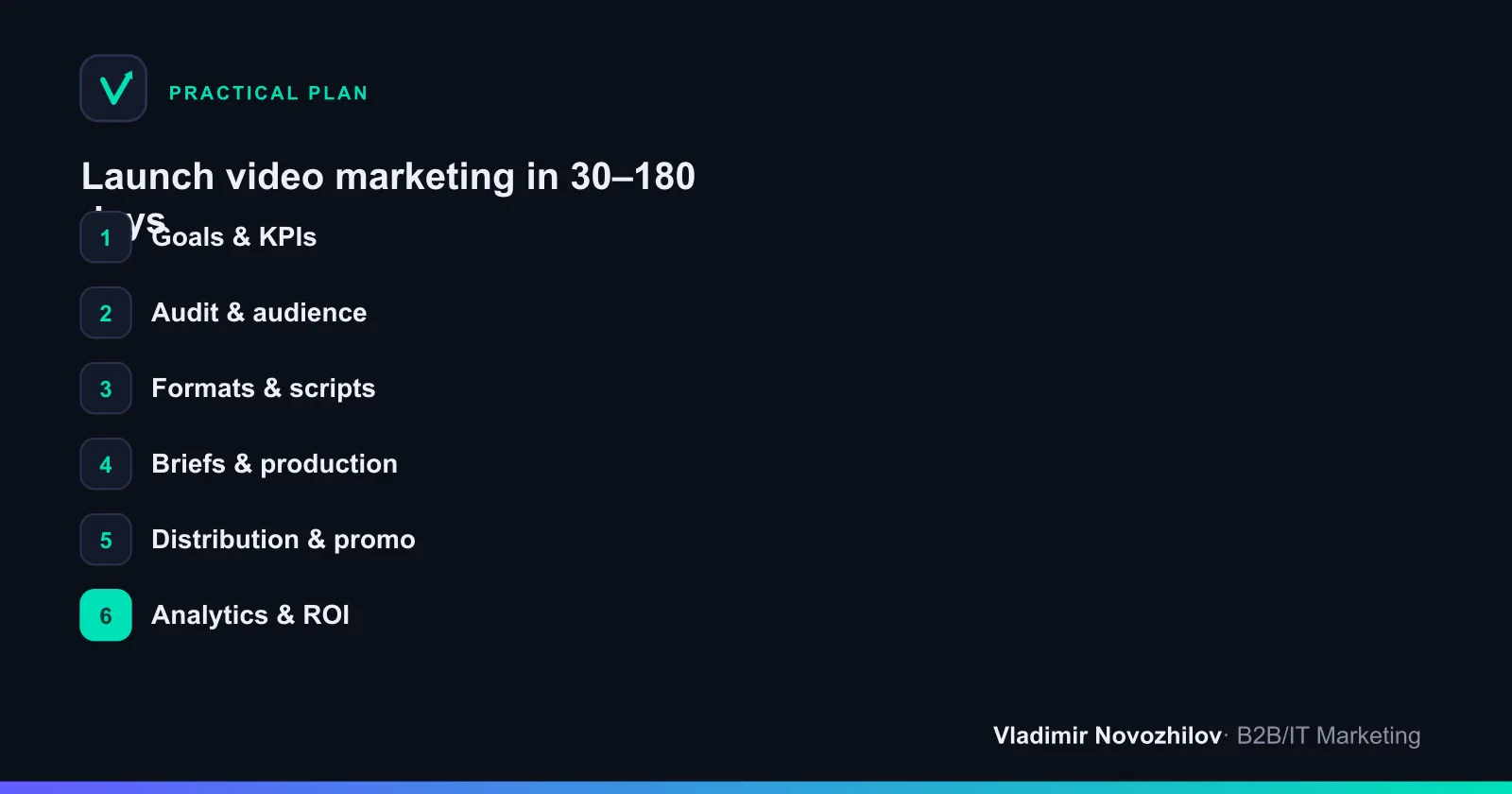
Step‑by‑step plan to implement video marketing (30/90/180 days)
30 days — start and hypotheses
- Team: product owner/marketer, copywriter/editor, editor. External — operator on demand.
- Result: brief, content plan, 5–8 short vertical videos, 1 explainer draft, basic analytics (UTM, view events, CRM tags).
90 days — scale and funnel
- Team: + motion designer/sound, webinar host.
- Result: 1 webinar/month + webinar clips (10–15 clips), 2–3 testimonials, releases on site/email, remarketing. A/B test creatives, optimize for VTR/CTR.
180 days — systematize and ROMI
- Team: producer/editor, production lead or reliable vendor.
- Result: quarterly content line, 2‑week short‑cycle tests, ROMI report, library of UGC/clips, localization for regions (language/dialect, CTA: phone/chat/form), legal guides.
Roles and budgets (in‑house vs agency)
- In‑house minimal viable stack: copywriter/editor, editor, SMM/distribution. Budget from 120–250k ₽/mo + media buy.
- Agency/production: faster for complex tasks, higher per‑clip fees, but predictability in timelines/quality. Explainer 150–400k ₽, series of shorts 50–150k ₽ for 8–12 pieces.
- Hybrid: creative and clipping in‑house; complex shoots outsourced. This balances cost/speed.
Legal and GEO:
- Account for ad restrictions in med, fintech etc.; include correct disclaimers.
- Local platforms (VK, Odnoklassniki, Yandex services) and tools (Yandex.Direct) provide predictable buys.
Frequently asked questions
FAQ
- What is video marketing and how is it different from ordinary video content?
- Video marketing is the systematic use of video in marketing: goals, hypotheses, production, distribution, analytics and optimization against KPIs (VTR, CTR, leads, sales). Ordinary video content is standalone clips without connection to strategy, funnel and metrics. The difference is management of outcomes and return on investment.
- Which video formats work best for B2B and how to use them in the sales funnel?
- Top‑of‑funnel: short and vertical videos (teasers, UGC, expert snippets). Consideration: explainers, demos, case studies (testimonials). Conversion: webinars, review videos with CTA, shoppable video on the website. In B2B, webinars and detailed explainers perform well; key metrics are VTR, watch time, CTR and lead submissions.
- How to measure video marketing effectiveness — which metrics and tools to use?
- Track VTR/View‑through rate, CTR, watch time/average view duration, CPM/CPC/CPA, CAC, LTV and ROI/ROMI. Set up attribution: UTM, post‑click and post‑view, site events (video_start, 50%, complete, click_to_CTA) and link to CRM to calculate leads and deals. Benchmarks vary by platform (YouTube, TikTok, VK, Instagram Reels, Odnoklassniki).
- How much does corporate video production cost and how to calculate ROI?
- Budgets depend on format: short videos from 50–150k ₽ per batch, explainer 150–400k ₽, webinars 30–120k ₽ per episode, testimonial 80–250k ₽. Calculate video ROI as: ROMI = (additional gross profit − video and media costs) / media+production. For B2B, account for CAC and LTV, not only direct sales.
- Which AI tools speed up production and clipping of videos?
- For video AI: Opus Clip, Munch, Vizard — automatic webinar clipping, subtitles, auto‑framing for verticals, localization. Also speech‑to‑text for scripts and editing guidance. These reduce production time by 30–60% without quality loss.