Corporate Blog: Why the Business Needs It and How to Launch and Run It


TL;DR
A corporate blog is a systematic effort with expert content that delivers traffic, leads, and customer loyalty. This guide explains why a blog matters for business, how to create and operate one, which platforms to use, and how to promote and measure results. Includes checklists, templates, and real examples.
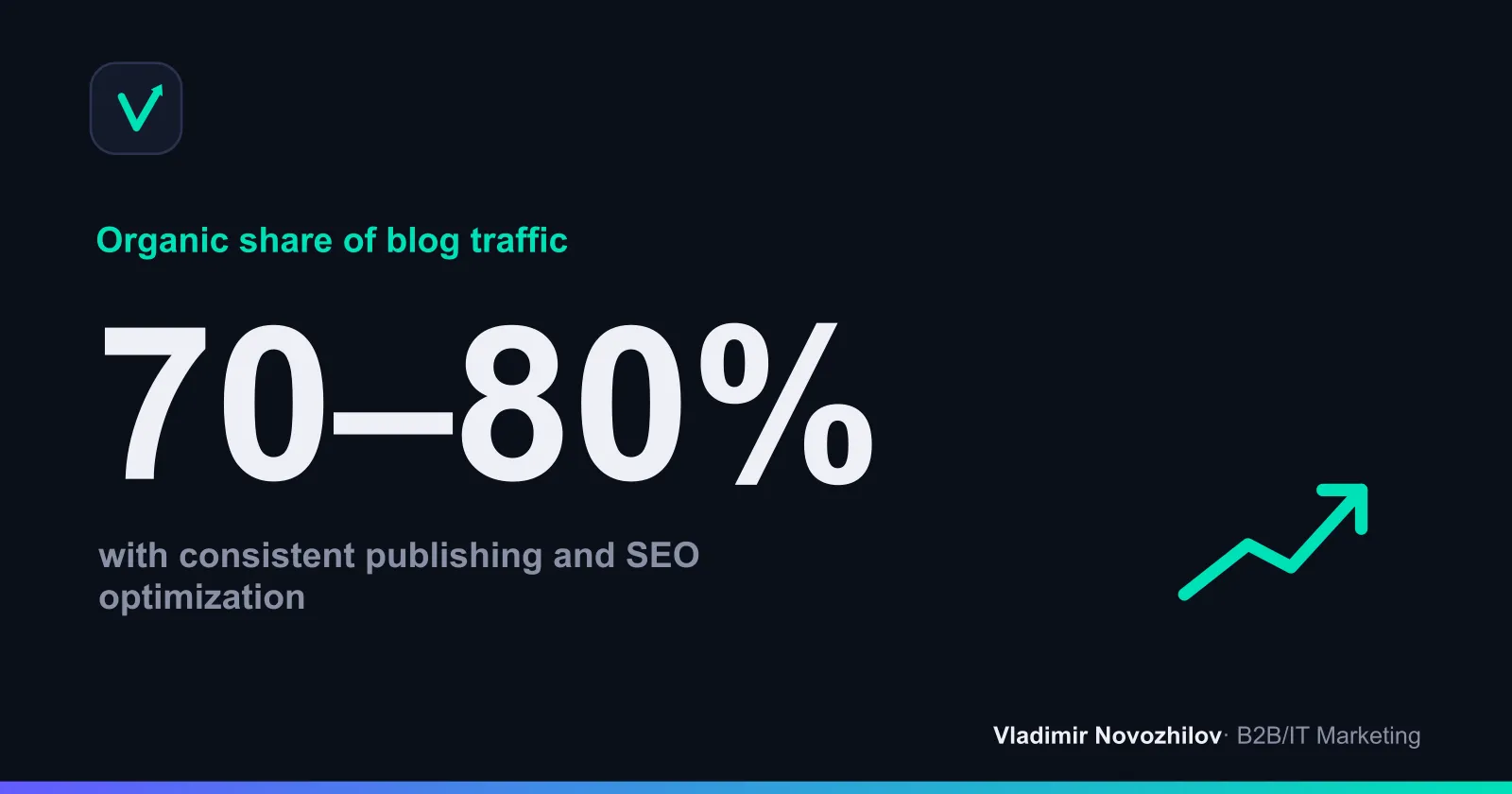
A strong corporate blog solves several tasks at once: it attracts organic traffic, builds trust, generates leads, and helps retain customers. It’s part of content marketing and a long-term company asset that can work for years.
How a corporate blog works and what value it delivers
In short: a brand media platform where the team systematically shares experience, helps customers, and demonstrates expertise. Why a company needs it:
- Capture stable organic traffic and build SEO momentum.
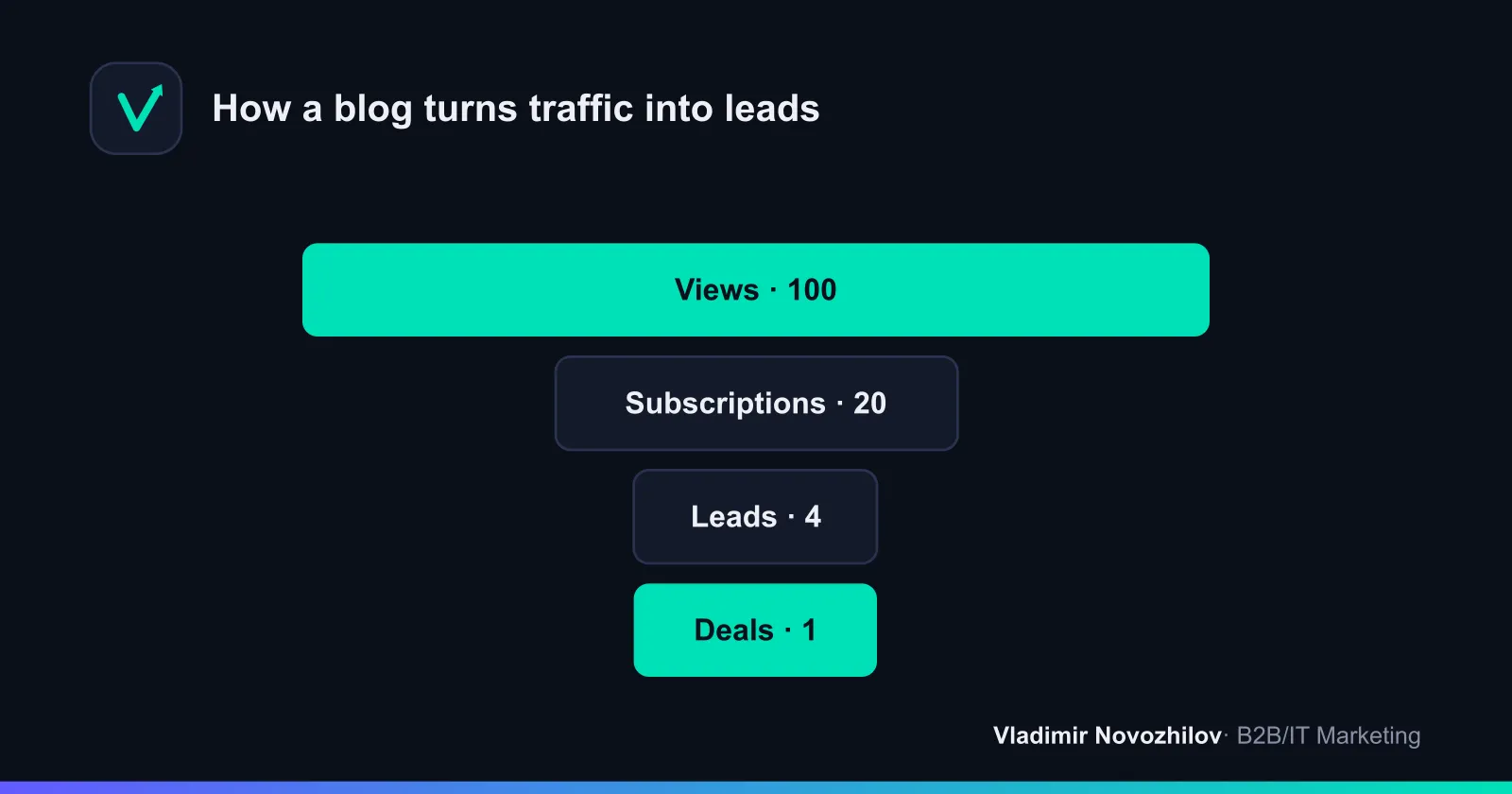
- Convert attention into subscriptions and leads via lead magnets and forms.
- Speed up deals (sales enablement) through case studies and breakdowns.
- Reduce acquisition costs (CPL) and dependence on paid ads.
- Increase loyalty and retention with useful content.
Internal vs public blog: what’s the difference
- An internal blog is a space for knowledge exchange: article base, regulations, onboarding. Tools: corporate portal, knowledge base in CMS, wiki. KPIs: onboarding speed, employee NPS, time to find answers.
- A public blog is an external channel for the market: articles, cases, analysis, product and industry news. Platforms: your own site and relevant external platforms. KPIs: traffic, subscriptions, leads, conversion to deals.
Five solid reasons to start a corporate blog
- Organic traffic and visibility growth for target keywords. 2) Lead generation and lead nurturing. 3) Expertise and trust. 4) Sales support and PR. 5) A long-living asset on your site and in search.
Who should and shouldn’t start a blog: pros and cons
Pros: a full acquisition channel, lower CPL, ready content for newsletters and social, accumulation of knowledge. Cons: requires time, subject matter experts, editorial discipline, and an SEO approach. Don’t rush if you don’t have resources for 4–8 pieces per month and a process owner.
Own site or third‑party platform: comparison table
Bottom line: the optimal setup is an article base on your own domain plus distribution and guest posts on relevant platforms.
| Критерий | Свой сайт | Сторонняя площадка |
|---|---|---|
| Контроль и владение | Полный контроль, своя CMS, своя редакционная политика | Зависимость от правил и алгоритмов площадки |
| SEO-эффект | Максимальный: индексируются все материалы, растёт домен | Средний/низкий: SEO у площадки, но ссылочный и брендовый эффект для вас |
| Охват аудитории | Растёт постепенно | Быстрый старт за счёт ленты и рекомендаций |
| Модерация | Внутренняя | От низкой до строгой, по правилам площадки |
| Стоимость | Разработка/поддержка сайта | Публикации часто бесплатны; промо и спецразмещения — по тарифам |
| Аналитика и CRM | Полная (сквозная аналитика, события, формы) | Ограниченная, UTM/переходы, частично формы |
| Риски | Технический долг | Блокировки, изменение правил, потеря охватов |
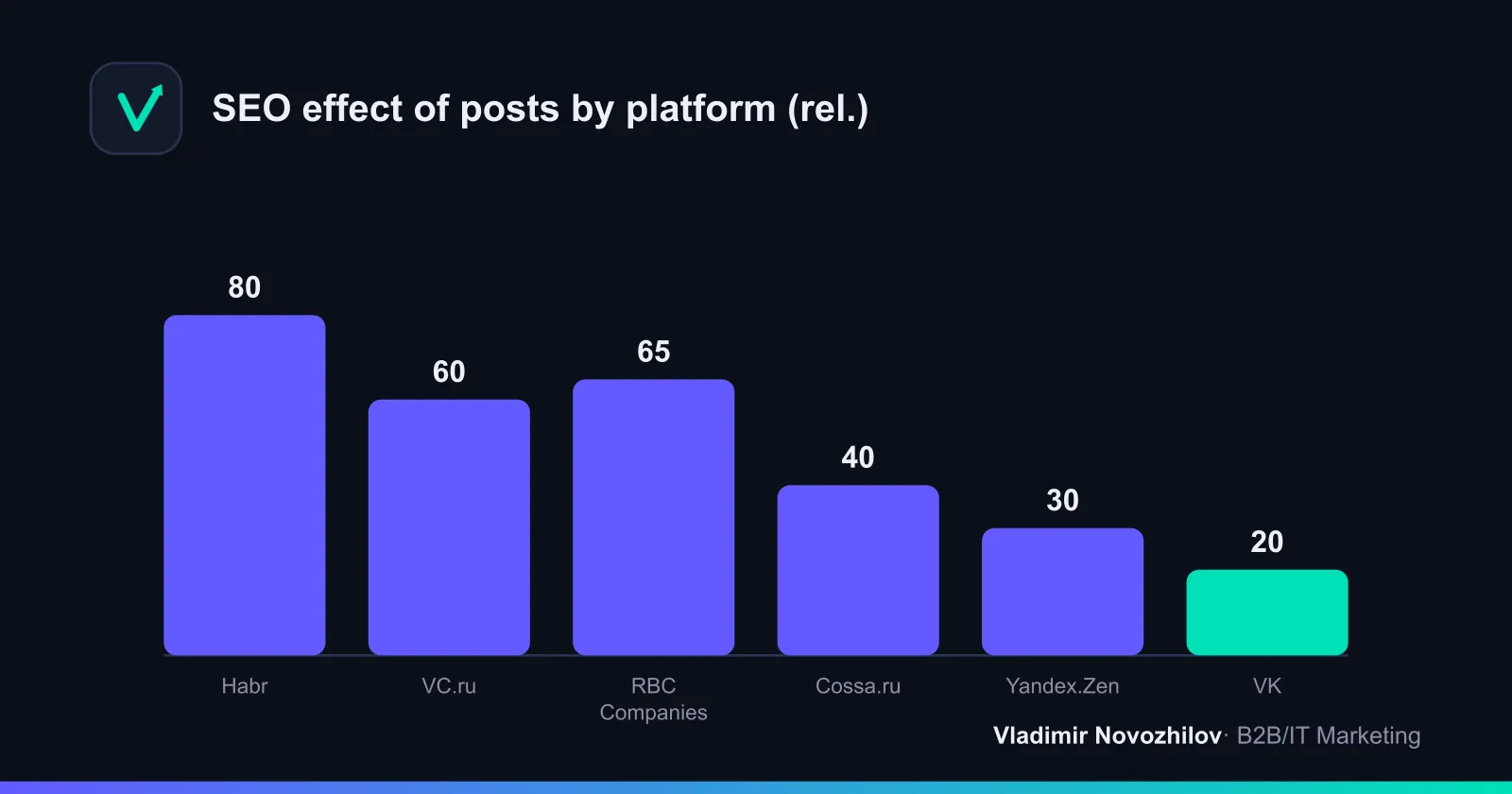
Overview of platforms for a company blog: Dzen, VK, Habr, VC, Medium, Spark, Cossa, RBC Companies
Brief notes on key platforms for a company blog:
- Yandex.Dzen: mass audience, wide range of topics. Publishing is free; promotion is paid via ad tools. Pros: quick reach. Cons: low direct SEO effect for your domain.
- VK: convenient for communities and serial posts. Publishing is free; promotion is paid. Pros: reach and retargeting. Cons: weak impact on your SEO.
- Habr: strong IT audience, strict moderation. Cost — corporate rates; content is selected. Pros: high expert status and quality traffic. Cons: depth requirements.
- VC.ru: entrepreneurs, marketing, IT. Publishing is often free, with rules and moderation. Pros: discussions and reach. Cons: competition for attention.
- Medium: English-speaking audience, tech/product topics. Publishing is free; monetization and subscriptions optional. Pros: global reach. Cons: limited relevance for a Russian audience.
- Spark: business community. Conditionally free; promotion via packages. Pros: niche traffic. Cons: moderate SEO effect.
- Cossa.ru: marketing and communications. Publishing by agreement/moderation. Pros: targeted audience. Cons: selection and editorial schedule.
- РБК Компании: business audience. Placements per media kit. Pros: brand effect and trust. Cons: paid placement, editorial requirements.
Comparative table by key criteria:
| Platform | Audience (B2B/B2C) | Publication cost | Moderation | SEO effect | Notes |
|---|---|---|---|---|---|
| Yandex.Dzen | Mass (B2C/B2B-lite) | Free; promo — paid | Low/medium | Low | Fast reach, recommendation feed |
| VK | Mass/communities | Free; promo — paid | Low | Low | Social graph, retargeting |
| Habr | B2B IT | Paid per tariff | High | High | Strong IT expertise |
| VC.ru | B2B/B2C business | Free; promo — paid | Medium | Medium | Discussions, comments |
| Medium | Global tech/product | Free | Medium | Medium | English-language reach |
| Spark | B2B entrepreneurs | Conditionally free | Medium | Low/medium | Niche network |
| Cossa.ru | Marketing/comm | By agreement | Medium/high | Medium | Profile readership |
| РБК Компании | Business/top management | Paid | High | Medium/high | Strong brand-media effect |
Content plan for a company blog: template
The purpose of the content plan is to ensure stable blog operations: topics, goals, experts, deadlines, funnel distribution (TOFU/MOFU/BOFU), SEO and distribution. Below is a “blog content plan” template:
| Тема/запрос | Цель (TOFU/MOFU/BOFU) | Формат | Контент для блога: основные тезисы | Эксперт/автор | Ключевые слова (SEO) | Дата/дедлайн | Статус | KPI (сеансы/подписки/лиды) |
|---|---|---|---|---|---|---|---|---|
| Пример: внедрение CRM в B2B | MOFU | Гайд + чек-лист | Этапы внедрения, риски, метрики | Руководитель внедрения | CRM, автоматизация продаж | 15.10 | В работе | 1500/60/10 |
| Пример: сравнение решений | BOFU | Обзор + таблица | Критерии выбора, TCO | Продакт/CTО | сравнение, ROI | 25.10 | План | 1200/40/8 |
| Пример: тренды отрасли | TOFU | Аналитика | Данные за год, прогноз | Аналитик | тренды, рынок | 05.11 | Черновик | 2500/80/5 |
Tip: add fields for “CTA” (what the reader should do), “distribution” (where and when we repost), and “content refresh” (review date in 6–12 months).
Stages to launch a corporate blog: checklist from idea to publication
- Define goals and KPIs (traffic, leads, SQL, ROMI). 2) Describe target audience and personas. 3) Choose platforms: own site + relevant externals. 4) Approve editorial policy (topics, depth, tone, legal limits). 5) Configure CMS, analytics and CRM: goals, events, forms, UTM tags. 6) Conduct keyword research and prioritize topics. 7) Build a quarterly content plan. 8) Organize production: roles, SLA, Kanban. 9) Prepare design guides and illustration templates. 10) Publish 3–5 “core” pieces (guide, case, analysis, FAQ). 11) Set up distribution: social networks, email, republishing on platforms. 12) Launch lead magnets and subscription. 13) Monitor metrics weekly, run retros and updates monthly.
Rules and specifics of running a blog: how to write so people read
The foundation of a strong corporate blog is usefulness, structure, and regularity.
- Usefulness: solve specific client problems, support content with data and examples.
- Structure: clear subheadings, lists, tables, illustrations.
- Regularity: a steady publishing and update rhythm. Technique: lead paragraph answering “what and why”, 3–5 logical blocks, visualizations, clear CTA. Don’t forget legal proofreading and a branded glossary.
How to run the company blog day to day
- Plan releases 2–3 weeks ahead, keep a backlog of topics.
- Involve SMEs: interview experts and expand into longreads.
- Explain complex things simply; avoid jargon without explanation.
- Distribute each piece in at least 5 channels.
- Update articles every 6–12 months if data changes.
Building a corporate blog: roles and tools
- Owners: editor, SEO specialist, designer, analyst, SMM/PR.
- Tools: CMS, task manager, content-plan spreadsheet, illustration templates, CRM and email integrations.
- Automation: unified brief and quality checklists, RSS‑to‑email, autoposting, UTM generation, revision reminders.
Personal brand vs company blog: which to choose
These are not mutually exclusive but complementary strategies. A personal brand accelerates trust and conversion in interviews and discussions; a company blog accumulates SEO value and scales the team’s knowledge. Best practice is to synchronize: experts write on behalf of the company, while opinion leaders amplify topics on social media and external platforms.
Promoting a corporate blog: SEO, social, email
- SEO: key map, internal linking, intent scenarios (“how to choose”, “how much it costs”, “case studies”), structured data, snippet optimization.
- Social: short extracts, carousels, video, discussions. Republish on VC.ru, Habr, Cossa.ru, РБК Компании, Spark. This accelerates company blog promotion.
- Email: digest 2–4 times/month, welcome series, personalization by interests.
- Partnerships and guest posts: co-authored texts with associations and industry media.
- Repurposing: turn one longread into 6–8 short pieces in different formats.
Blog performance metrics: what and how to measure
Measure across the funnel: reach → engagement → subscriptions → leads → deals.
- Traffic: sessions/unique users, organic share, rankings for priority clusters.
- Engagement: snippet CTR, depth of view, time on page, scroll depth.
- Subscriptions: subscription conversion (subscriptions/sessions), unsubscribes, email open rates.
- Leads: conversion (leads/sessions), CPL = Затраты/Лиды.
- Sales: SQL, conversion to deals, revenue from blog, ROMI = (Доход − Затраты)/Затраты.
- Brand: direct visits, media mentions, branded queries. CRM linkage: assign each lead a source and content history; attribute deals to blog touches. This helps protect budget and prioritize topics by ROI.
Examples of successful corporate blogs from Russian companies
Below are examples based on public cases and market practice:
- Case (B2B integrator, IT): after 9 months at 6–8 articles/month — organic traffic rose from 0 to 35k sessions/month; 420 leads from the blog, deal conversion 2.6%, positive ROMI from month 7.
- Case (marketing platform): in 6 months — +120% SEO traffic, 1.8k email subscribers, 90 SQL, blog CPL 35% lower than paid performance.
- Case (HR‑tech): a series of guides + cases on VC.ru and РБК Компании delivered 280k impressions and 600 site clicks, 70 leads with 5% demo conversion.
- Case (fintech for SMB): publications on Habr and Cossa.ru brought 12k clicks and 60 registrations; average check was 18% higher for audiences coming from expert articles.
Common mistakes in running a corporate blog
- No process owner and no editorial policy.
- Publishing without SEO research and intent matching.
- Infrequent publishing: 1–2 posts/month with no distribution plan.
- Weak CTAs and absence of lead magnets.
- No CRM integration and no end-to-end analytics.
- Ignoring content updates and snippet A/B tests.
FAQ about the corporate blog
Frequently asked questions — short answers below.
-
Why does a company need a corporate blog if it has social media? Answer: Social networks provide quick reach, but content burns out fast and is poorly indexed. A blog delivers stable SEO traffic, leads and data control. Best is to combine: a base on your site + distribution to social and platforms.
-
How much does it cost to run a corporate blog and when does it pay off? Answer: The budget depends on the team and frequency. With 4–8 pieces per month, effects show in 3–6 months, payback in 4–9 months. Calculate CPL and ROMI: CPL = Затраты/Лиды; ROMI = (Доход − Затраты)/Затраты.
-
Where is it better to run a blog — on your site or a third‑party platform? Answer: Your site — for control, SEO and CRM. Third‑party platforms — for quick reach and branding. Combine: publish on your site, republish and guest-post on VC.ru, Habr, РБК Компании, Cossa.ru, Spark, Yandex.Dzen.
-
How often should a company publish blog materials? Answer: For B2B — 4–8 materials per month. Regularity is more important than one-off spikes; monitor quality, data and updates.
-
How to measure the effectiveness of a corporate blog? Answer: Track traffic, organic share, rankings, subscriptions, leads, SQL and sales. Calculate CPL and ROMI, link articles to leads in CRM and refresh low-performing topics.
FAQ
- If a company already has active social media, why also have a blog?
- Social networks provide quick reach, but content there burns out fast and is barely indexed. A blog accumulates stable SEO traffic, generates leads, and gives you control over data. The best approach is a base of articles on your website plus distribution to social media and platforms.
- How much does running a blog cost and when to expect payback?
- Budget depends on the team composition and publishing frequency. With 4–8 publications per month, noticeable results appear in 3–6 months, payback in 4–9 months. Calculate CPL and ROMI: CPL = Затраты/Лиды; ROMI = (Доход − Затраты)/Затраты.
- Where should materials be published: on our site or on external platforms?
- Your site is for control, SEO and CRM integration. External platforms are for quick reach and branding. Combine both: publish on your site, republish and guest-post on VC.ru, Habr, РБК Компании, Cossa.ru, Spark, and Yandex.Dzen.
- What publishing rhythm is optimal for a B2B company?
- A guideline is 4–8 materials per month. Regularity matters more than sporadic bursts: maintain quality, data-driven topics, and updates.
- How to correctly measure the blog's effectiveness?
- Look at the funnel: traffic, organic share and rankings; engagement; subscriptions; leads and SQL; sales and ROMI. Link articles to leads in CRM and refresh topics with low returns.